NH Cooling Network
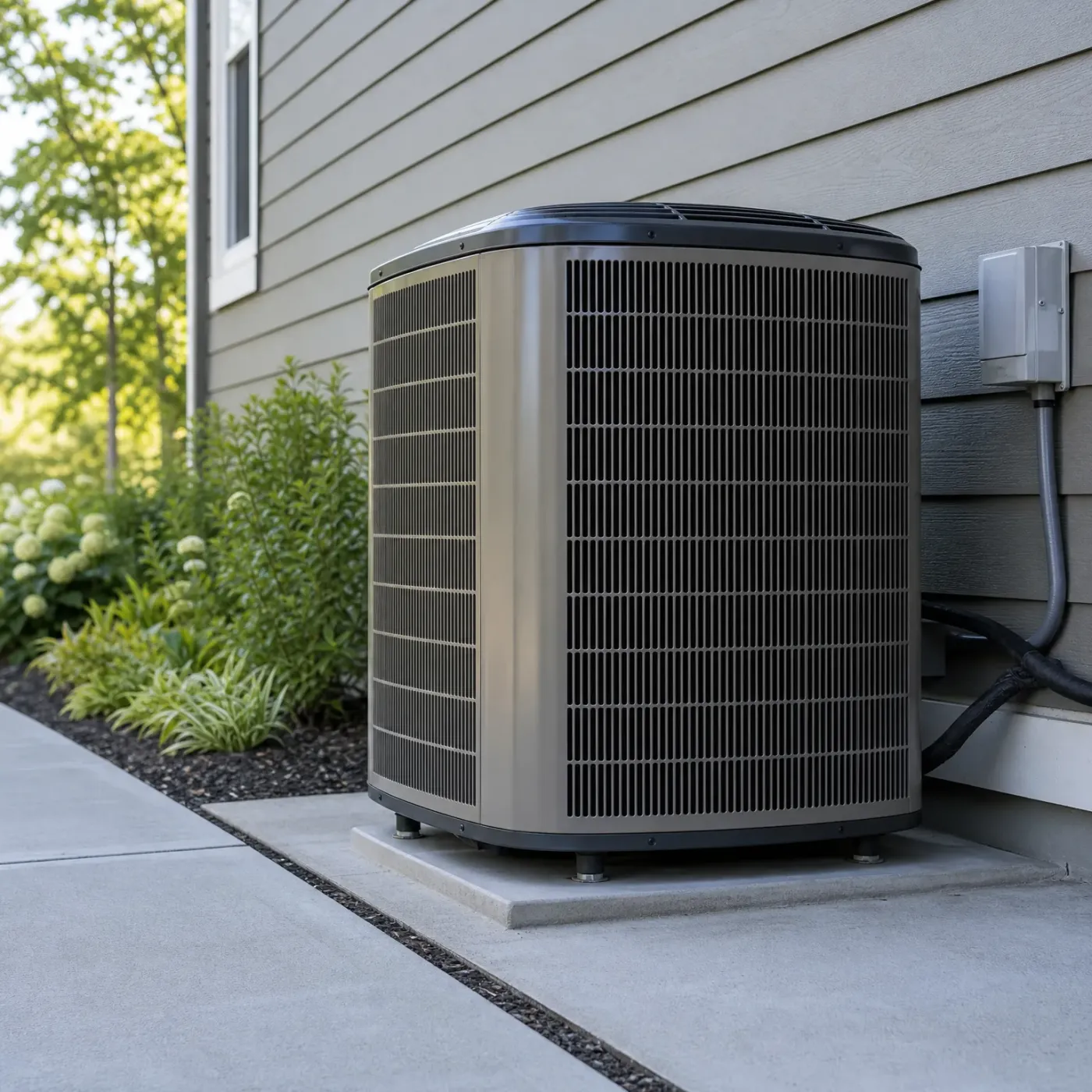
An outdoor air conditioning condenser unit on a concrete pad beside a house with horizontal siding, with an electrical disconnect box on the wall and shrubs to the right in low evening light.

Send one request and you're done looking

Do you need a dehumidifier with AC in New Hampshire

Summer air in New Hampshire isn't the heavy, sticky kind you'd fight further south, so it's fair to wonder if your AC needs any help with moisture at all. The answer depends on your house and how that air feels once it's cooled. Below is what decides it, and if you want it settled, one call gets a local contractor out to look at your setup.

Send my request

Most homes in New Hampshire don't need a separate dehumidifier running alongside the AC. Your air conditioner already pulls moisture out of the air as it cools, and because New Hampshire summers aren't heavy with humidity the way they are further south, that's usually enough to keep a house feeling dry. Where it falls short is in rooms the system struggles to cool evenly, like a basement or a space with little airflow, where the air can stay damp even when the thermostat says the house is at temperature. It also falls short if your AC is oversized for the space, since it cools the air quickly and shuts off before it has pulled out much moisture at all. If your house feels sticky despite the AC running, that's usually a sign of one of those two problems, not a sign every New Hampshire home needs added dehumidification.

A dim bedroom with an unmade bed beside a window holding a box fan, with sheer curtains, a lamp at right and a large blank wall at left.

By nine the sun's down but your upstairs bedroom hasn't let go of the day. The box fan in the window is just moving the same warm air around, not cooling it. You push your hair off your neck and the sheet already feels damp where you've been lying on it. It's June, not the thick August heat you'd get further south, but the room two floors up from the oil burner has been holding warmth since noon. Downstairs the AC is running fine. Up here, you can't tell. You turn the fan up a notch and open the door to the hallway, hoping the air will move if it has somewhere to go.


Does Your House Need Both

AC alone is enough

  • Your air conditioner already removes moisture as part of cooling your house, since the coil pulls water out of the air that passes over it.
  • New Hampshire summers run mild on humidity compared to states further south, so the AC isn't fighting a heavy, wet load to begin with.
  • If your rooms feel dry and comfortable once the temperature drops, the AC is keeping up with moisture on its own.
  • A system sized correctly for your house will cycle enough to pull out the moisture it needs to without added equipment.
  • Adding a dehumidifier you don't need is another appliance drawing power, and electricity here already runs high.

A dehumidifier helps

  • If a room feels damp or musty even after the AC has cooled it, the air conditioner isn't removing enough moisture on its own.
  • A basement or a room with little airflow can hold onto moisture that the AC, working elsewhere in the house, never reaches.
  • Short cooling cycles on a mild day can drop the temperature without running long enough to wring the humidity out.
  • A whole-home dehumidifier tied into your ductwork handles moisture across every room instead of leaving it to whichever space the AC return pulls from.
  • If musty smells, foggy windows, or a clammy feel show up in one part of the house, that's a sign worth having a contractor look at.
A gray outdoor air conditioner condenser unit on a concrete pad beside a house with horizontal lap siding, with a wall-mounted disconnect box and conduit at left and a green shrub and mulch bed at right.

AC running right

This is what moisture control looks like when it's working. The coil pulls humidity out as it cools, the condensate line carries it off, and the air inside feels dry enough that 74 degrees feels like 74 degrees. No clamminess, no musty smell, nothing to add.

An outdoor air conditioner condenser unit on a concrete pad beside a house with horizontal lap siding, with a conduit running to a gray electrical disconnect box on the wall.

AC struggling to keep up

Same unit, same pad, but something's off. Maybe it's sized wrong for your house, maybe it's low on charge, maybe it's short cycling before it ever pulls real moisture out. The air stays cool but feels damp, and that's a sign worth having a contractor look at before you assume you need a dehumidifier.

A man with grey hair and stubble in a dark sweater sits on a grey sofa indoors, looking off to the side, with a potted plant and a sunlit window behind him.
A man with gray hair, a beard and glasses, wearing a dark green sweater, sits on a gray sofa in a sunlit living room with a potted plant, table lamp and wooden sideboard behind him.
A middle-aged man with graying hair and a short beard sits on a blue sofa in a living room, looking toward a window, with a bookshelf, lamp and framed picture in the background.
A man with graying curly hair and a dark green sweater sits on a gray sofa in a sunlit living room, looking off to the side, with a framed picture, shelving, an armchair and a window with sheer curtains behind him.
An outdoor air conditioning condenser unit on a concrete pad beside a house with horizontal lap siding, with a gray electrical disconnect box and conduit on the wall and green shrubs and trees to the left.

Finding a pro stops being your job

One installer gets your project, so there's no bidding war over it.

Send the form and the search for an installer is over.

Find a local pro

No fee to send it, and nothing to sign.

Does your house feel damp even with the AC on

You've got the thermostat set where you want it, but the air still feels thick. The sheets in the bedroom don't feel dry. A window left cracked overnight leaves a faint sour smell by morning, or you've noticed condensation beading on a cold glass left on the counter longer than it should. Maybe the basement has that underground smell no matter what the thermostat says upstairs. None of that is normal just because it's summer. If it's happening with the AC running, moisture is building up somewhere in the house faster than the system is pulling it out, and left alone that's how mildew gets started on closet walls and window frames.

An outdoor air conditioner condenser unit on a concrete pad beside a house wall, with a gray electrical disconnect box and conduit above it and grass in the foreground.

How the coil actually works

Cold refrigerant runs through the coil, and when warm air passes over it, the moisture in that air condenses on the metal the same way water beads on a cold glass. That water drips into a pan and runs out through the condensate line. It happens every time the AC runs, whether you notice it or not. The colder the coil and the longer it runs, the more water comes off it. That's the whole mechanism, and it doesn't need a second machine to do it.

A gray outdoor air conditioner condenser unit on a concrete pad beside a house with horizontal lap siding, surrounded by white gravel and a lawn, with a white wall at left.

Why oil heat doesn't change this

Most houses in New Hampshire heat with oil, but that system has nothing to do with your AC's ductwork or how it handles summer moisture. The furnace and the air conditioner can share the same air handler and ducts without one affecting what the other does for humidity. If your AC is sized right and running on a hot, muggy stretch, it's pulling water out of the air whether the furnace behind it burns oil, gas, or runs on electric resistance coils.

Power costs 24.53 cents per kilowatt-hour statewide

At 24.53 cents per kilowatt-hour, running your AC longer than it needs to costs you fast. An oversized dehumidifier working alongside a properly sized AC just adds load and drives that bill up further, with little to show for it in a state where the air isn't that heavy to begin with.

EIA-861 2025 statewide residential average

A standalone dehumidifier makes sense when a specific room runs damp, like a basement that stays musty no matter what the AC upstairs is doing.

It does not make sense as a whole-house add-on when your oil furnace and ductwork were never the problem to begin with, and the AC was already handling the air just fine.

An outdoor air conditioning condenser unit on a concrete pad beside a house with horizontal siding and a concrete foundation, with dry brown leaves on the ground to either side.
Before you get your air conditioner installation
A gray outdoor air conditioning condenser unit on a concrete pad beside a house with horizontal lap siding, with a wall-mounted disconnect box and conduit, and shrubs to the left.
After you get your air conditioner installation
A two-story gray horizontal-siding house with multiple gables, a covered front porch with white columns and railing, and a dark front door, fronted by a patchy green and brown lawn under a clear blue sky.

A dew point of 59°F is the average across June, July and August in New Hampshire, based on weather station data for the state. That number sits in the comfortable range. Anything near 55 to 60 feels fine to most people, and 59 doesn't push into the muggy territory you'd get further south. For your air conditioner, that means the coil isn't fighting a constant load of moisture every time it cools your house. You'd notice this as air that cools evenly without that clammy feel even when the AC has been running for hours. It's also why a separate dehumidifier has little left to do once your AC is sized and installed right.

NASA POWER T2MDEW county cells weighted by homes

A woman with shoulder-length brown hair wearing a beige knit cardigan sits in a gray upholstered armchair near a window, looking off to the side with a slight smile, with bookshelves blurred in the background.
A woman with her hair in a bun holds a sleeping young child against her chest, both wrapped in a textured beige knit blanket on a sofa in a dimly lit room with a lamp, framed picture, and bookshelf behind them.

What to do with this

  • New Hampshire's dew points stay low enough that your AC's own coil handles the moisture on its own in most houses.
  • A separate dehumidifier only earns its keep in a specific damp spot, like a basement, not as a whole-house fix.
  • Adding one next to a properly sized AC mostly just adds load, and at 24.53 cents per kilowatt-hour that shows up on the bill.
  • If your AC install needs a second look, a local contractor who works on these systems every summer knows what tends to go wrong in houses like yours.
  • You're matched with one licensed New Hampshire contractor, not a handful of companies competing for your callback.

Your AC is doing the job New Hampshire actually needs from it. The air here doesn't carry the kind of moisture load that calls for backup, so the coil pulling water out as it cools is usually the whole answer. A dehumidifier earns a place in a basement that stays damp on its own, not bolted onto a system that's already sized and running right. Add one anyway and you're not fixing anything, you're just paying to run it, and at 24.53 cents per kilowatt-hour that cost shows up fast with nothing to show for it.

Where this matters is making sure the install itself is right, because a unit that's undersized or oversized for your house will struggle with humidity no matter what you add to it. That's a question for someone who looks at these systems all summer in New Hampshire homes, not a general number pulled from a chart. A contractor working this state knows what tends to go wrong here: a system sized for a different climate, a coil that never had a chance to pull its weight, ductwork that's fighting the equipment instead of working with it.

When you put in a request, it goes to one licensed contractor local to New Hampshire, not a handful of companies all calling you back at once. You get someone who knows this equipment and this climate, looking at your specific install, not a pile of competing quotes to sort through on your own.

An outdoor air conditioner condenser unit on a concrete pad beside a dark horizontal-lap sided house, with mulch beds, shrubs and ornamental grasses nearby.

Let someone else find the pro

The pro who reaches out is licensed in New Hampshire.

Step 1 of 3: Equipment