 Find a pro near me
How to get your AC ready for a New Hampshire summer
A local pro who services air conditioners gets in touch about the tune-up.
New Hampshire summers don't put the strain on an AC that you'd see further south. But the unit still sits unused for months at a time, through a cold winter and a wet spring, and that's when a clogged coil or a low charge turns into a system that runs all day and barely cools the house.
Power here costs more than almost anywhere else in the country. A system that has to work harder because of a dirty coil or a weak capacitor shows up on your bill fast, and most homeowners won't notice the cause until the first hot week when the AC can't keep up.
Most houses here heat with oil, which means the AC is its own separate system, often without anyone checking on it between summers. Nobody comes through to look at it unless you call for that.
Getting it looked at before the heat sets in means a contractor who works on this equipment all season, in this climate, checking the parts that tend to fail after a New Hampshire winter: the capacitor, the refrigerant charge, the coil. Someone who's seen what a season of sitting idle does to a condenser outside in the snow, and knows what to check first.
Request a match and you're connected with one contractor, local to you and licensed in New Hampshire, not a list of companies competing for the job. They'll reach out directly to get a sense of your system and your house before they ever show up.
Below, the specifics: what to check yourself, what a tune-up actually involves, and when to get someone out before the first real heat arrives.
When should I get my AC serviced before summer in New Hampshire?
Your AC has sat idle since last September, through a cold winter and mud season, and now the warm weather is close. You're not sure if it needs attention before you switch it on, or if it's fine to just turn the thermostat down and go. The unit isn't working hard most of the year here, but that doesn't mean it's ready to run.
Get it serviced in April or May, before the first warm stretch
A unit that's sat all winter needs a look before it has to run. Dust settles on the coil, mice and debris get into the outdoor unit, and refrigerant can leak out slowly without anyone noticing until the system is struggling to keep up. Servicing it in spring, before the first hot days, means a technician catches a weak capacitor or a low charge while it's a simple fix rather than a breakdown in July. New Hampshire summers don't demand much of an AC most days, but a system that wasn't checked after sitting idle is more likely to fail on the one week it actually gets hot and humid, which is exactly when a contractor's schedule is hardest to get on.




Why does your AC smell musty when you first turn it on
Flip it on for the first time and you might get a musty smell for a few minutes, or air that doesn't feel as cold as it should. Maybe you hear a rattle that wasn't there last September. These are the marks of a unit that sat through a New Hampshire winter and a wet spring without running. Moisture gets into places it shouldn't, dust settles on the coil, and small parts that depend on being used stiffen up over months of sitting idle. None of that is dramatic on its own, but a system that struggles to cool runs longer to do it, and with what power costs here, that shows up on your electric bill before it shows up as a breakdown.

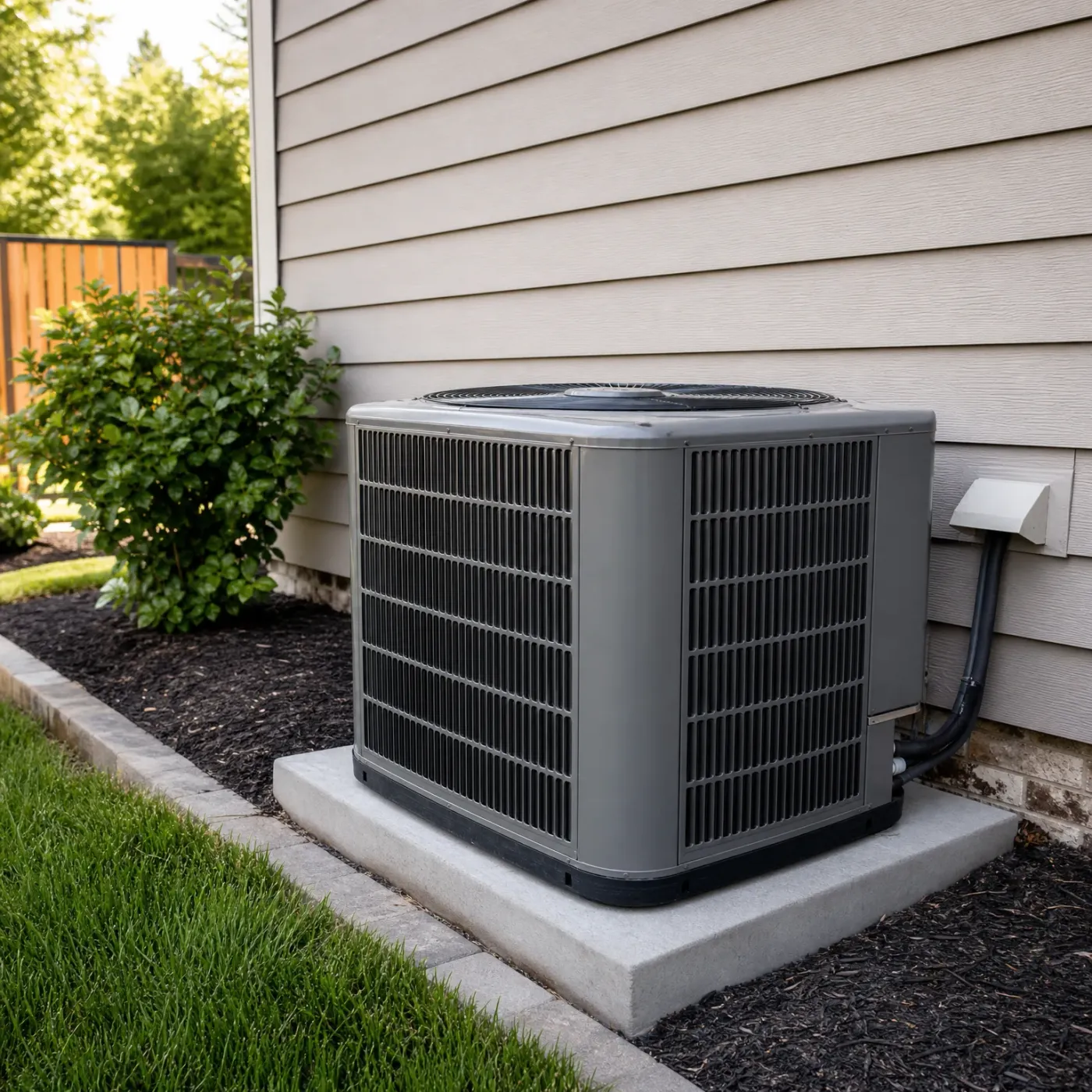
Late May, and the cottonwoods along the side yard have let go. You're out checking the garden beds when you notice it: the condenser tucked against the house, its fins gone white and fuzzy, like someone draped it in a thin blanket of snow. You crouch down and see the fluff has packed itself into the grille, caught on every ridge of metal. It's been building for days, maybe longer, while you weren't looking. You run a finger across it and it comes away gray with dust stuck in the fibers. Behind you, the yard is green and the air is warm enough now that you've been thinking about turning the unit on this week.


A tune-up is really a sequence, and skipping a step changes what the next one finds. A technician checks refrigerant pressure first, because a system low on charge will show frost on the suspect line even when the coil is clean. Next comes the condenser fan motor and its capacitor, tested under a load meter rather than just spun by hand, since a capacitor can turn the fan and still be too weak to get it to full speed under a summer afternoon. Only then does the coil get washed, working from the inside out so loosened grime rinses away from the house instead of deeper into the fins. The last step is the one most people never see: measuring amp draw at the compressor while the system runs a full cycle, because a compressor pulling more amps than it should is usually the first sign of a problem that hasn't failed yet. Do them out of order and a technician can replace a capacitor on a unit that was really low on charge, and you'll be back to a warm house in a week.


An air conditioner pro near you
A licensed local pro takes the request for your air conditioner tune-up.
Describe your air conditioner job, and a local pro who handles it gets in touch.
You only hire the pro if you want to.

What a skipped tune-up costs you by August
A system that's been running dirty since June doesn't fail all at once. It just costs more every month to do less. Power in New Hampshire isn't cheap, and a condenser working harder to push the same cool air shows up on your bill before it shows up as a breakdown. By August you might notice rooms that don't cool evenly, or the unit running longer than it used to for the same result.
If you'd rather not guess at what's wrong from the sound it's making, a local contractor who services AC systems all over New Hampshire can take a look. You'd be matched with one contractor, someone who works on this equipment every season and has a good sense of what tends to go first in a unit that's sat all winter, not a handful of companies competing for your call.


New Hampshire summers feel mild next to places further south, but the air still carries some moisture. Averaged across June, July and August, the dew point near homes here runs 59°F, according to NOAA climate data. That's enough to leave a film of moisture on your coil as the unit runs, and if the coil's already carrying dust from sitting all winter, that moisture turns it into a layer of grime instead of drying off clean. You'll notice it as air that feels cool but not crisp, or a system that cycles longer than it used to.
NASA POWER T2MDEW county cells weighted by homes
Tune-Up Now or Risk It This Summer
Tune-up before summer
- A technician checks refrigerant charge and cleans the condenser coil before the first hot stretch, so the system isn't working against grime and low pressure at once.
- Catching a weak capacitor or a cracked contactor in May means a part swap, not a breakdown on a 90 degree day in July.
- A clean, charged system holds its output, so you get the same cool air without the compressor drawing more power to make up for it.
- Since power in New Hampshire runs among the highest rates in the country, a unit running at its rated efficiency matters more here than in a cheaper-power state.
- A technician who works this equipment every season in New Hampshire knows which parts tend to fail after a winter of sitting idle, like a stuck contactor or a cracked capacitor.
Skipping it
- The unit still turns on and blows cold air at first, so there's no sign anything is wrong until the house can't keep up with a hot stretch.
- A dirty coil or a low charge doesn't cause a breakdown right away. It just makes the system run longer to do the same job.
- By August, a system that's been running dirty since June is costing more every month without anyone noticing why.
- If a capacitor or contactor was already weak from sitting all winter, the first real hot day is what finally finishes it off.
- A breakdown in July means waiting on a repair during the week it's hardest to get one scheduled.

Check refrigerant pressure first, since low charge shows up as frost
Clean the condenser coil so the fins release heat the way they should
Test the capacitor and contactor under an actual electrical load
Check the blower motor and clear the condensate drain line
Power costs 24.53 cents per kilowatt-hour statewide
At 24.53 cents per kilowatt-hour, every hour your condenser spends fighting a dirty coil or a weak capacitor shows up on your bill fast. A unit that's been tuned up pulls the power it needs and stops, instead of running long and hard against grime it shouldn't have to push through.
EIA-861 2025 statewide residential average
Where your AC stands now
- A spring tune-up checks the charge, cleans the coil, and tests the capacitor before the first warm stretch hits.
- Catching a weak part in May costs you a visit, not a system down in July with no appointment free for days.
- A clean condenser pulls the power it needs and stops, instead of running long against grime and low charge at once.
- Power in New Hampshire runs 24.53 cents per kilowatt-hour, so a unit working harder than it should shows up on the bill fast.
- An AC that sat through a cold winter and a wet spring needs a check before you rely on it all summer.
- A local contractor who services this equipment every season knows what tends to fail first in a unit that's been idle since fall.
Your air conditioner has been sitting since last fall, through a cold winter and a wet spring, and none of that is kind to a coil or a charge. A tune-up before the first hot stretch means a technician finds a weak capacitor or a coil packed with grime while it's still an easy fix, not a dead system on the one week you need it. That matters more here than it would somewhere with cheaper power. At 24.53 cents per kilowatt-hour, a condenser fighting grime or low charge runs longer to do less, and you pay for every one of those extra minutes. A unit that's been checked and cleaned pulls what it needs and shuts off. One that hasn't just keeps drawing.
None of this requires guessing. Refrigerant pressure, coil condition, the capacitor under load, the condensate line: these are things a technician can check and either confirm are fine or aren't. You don't need to know which one is the problem in your unit. You need someone who works on this equipment every summer in New Hampshire to look at it before the warm weather settles in, not after it's already struggling. A contractor local to you, matched to your system rather than sent out blind, is the one checking it. That's someone who's seen what a winter like yours tends to do to a unit like yours, and knows where to look first.


Air Conditioner Maintenance
A local pro for your air conditioner maintenance
Only one pro gets your request, so you hear from one company.
