The R-410A phase-out and new AC units in New Hampshire

After this form, you can stop searching for an air conditioner pro.

Let a pro reach out

Can I still buy a new central air conditioner in New Hampshire with R-410A?

You've been hearing about a refrigerant phase-out and want to know if it affects a new AC purchase this year. Maybe your current unit is on its last leg before next summer, or you're just planning ahead before the warm months return. You want a straight answer before you start getting quotes.

No, new equipment made since 2025 uses R-454B instead

Manufacturers stopped building new central air conditioners and heat pumps that use R-410A as of January 2025. That was a federal rule, not something specific to New Hampshire, and it applies to every manufacturer selling in the US. New systems now use R-454B, a refrigerant with a much lower impact on the atmosphere if it ever leaks out. This doesn't affect anyone whose current AC already runs on R-410A. That refrigerant is still made and still legal to service for years to come. It only means that if you're installing a new system now, the unit itself will be built for R-454B, and it will need a contractor who has the equipment and training to handle that refrigerant.

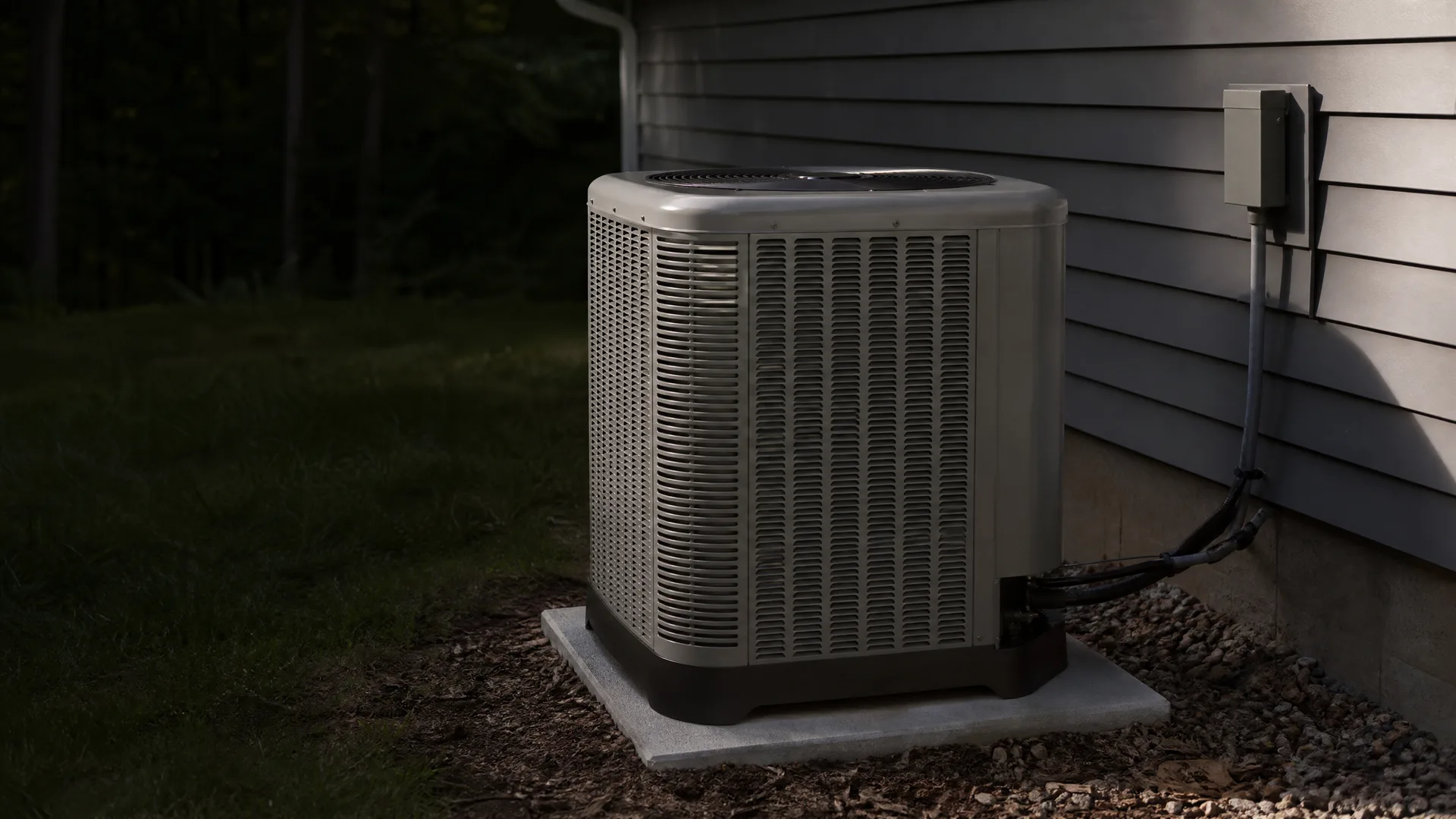
An outdoor air conditioner condenser unit on a concrete pad beside a house with beige horizontal siding and a stone-veneer base, with refrigerant lines running to a gray wall-mounted electrical box, surrounded by dark mulch, a flowering shrub and an evergreen on the left.

Your AC running fine now

If your system is cooling the way it should, nothing about the phase-out changes your summer. R-410A units keep working, keep getting serviced, and keep getting recharged if they ever need it. There's no deadline that forces you to replace a unit that's doing its job.

An outdoor air conditioning condenser unit on a concrete pad beside a house with light vinyl siding, an electrical disconnect box and conduit on the wall, bare shrubs and mulch to the right, and a concrete walkway in the foreground.

Your AC on its way out

If yours is old enough to be failing, the phase-out does change the decision in front of you. A repair might keep an R-410A unit going a while longer, but a full install now means choosing new equipment and new refrigerant rules at the same time.

A man in a blue sweatshirt reclines with closed eyes in a brown leather armchair in a living room with a bookshelf, houseplant, sofa, window, and a side table holding newspapers and a dark mug.
A bearded man in a gray pullover reclines with closed eyes on a brown leather sofa in a sunlit room with a window, framed picture, potted plant, and a wooden cabinet holding papers and a dark mug.
A man in a gray sweater leans back with closed eyes in a brown leather armchair beside a wooden side table holding a dark mug and a folded newspaper, with bookshelves and a window seat behind him.
A man in a green sweater reclines in an armchair with his eyes closed and a slight smile, beside a window with plants, a small table holding a mug and folded newspaper, and bookshelves behind him.

How the new refrigerant changes installation

  • R-410A is being phased down under federal rules, not banned outright, so existing units and parts stay legal to service.
  • New AC equipment made from 2025 on uses R-454B or another lower-GWP refrigerant instead of R-410A.
  • R-454B holds less refrigerant charge per ton of cooling than R-410A, so the coils and lines are sized differently.
  • A mismatched system matters here because an oil-heated home often pairs the AC with an air handler, and both sides need to match the refrigerant.
  • Installers now carry separate recovery machines and gauges for R-454B since it can't mix with R-410A in the same tools.
  • Manufacturers redesigned compressors and coils for the new refrigerant, so a straight swap onto old equipment isn't possible.

The phase-down is a federal rule, not a ban. It governs what gets manufactured going forward, not what's already running in your yard. If your system holds R-410A today, it stays legal to service and recharge. What changes is what shows up on the truck for a new install. Equipment built from 2025 on uses R-454B or a similar refrigerant in place of R-410A, and that's not a simple substitution. R-454B runs at a different pressure and holds less charge per ton of cooling, so the coils and line sets are built to different specs. A compressor engineered for R-410A can't just be filled with the new refrigerant instead. That matters in a home that heats with oil, because the AC side often shares an air handler with the heating system, and both halves of that pairing need to match the refrigerant the equipment was built around. An installer can't mix the two either. R-454B and R-410A can't share a recovery machine or gauge set, so a contractor working on your new unit is running separate tools from the ones used on the old one. None of this means your current R-410A system is on borrowed time. It means that when you do replace it, the new equipment is a different design top to bottom, not last year's unit with a new label on the refrigerant tank.

An outdoor air conditioning condenser unit on a concrete pad beside a house with white horizontal lap siding, with an electrical disconnect box and insulated refrigerant line on the wall and a shrub over mulch to the right.
An R-410A system still running fine keeps doing exactly what it's done, cooling your house through the warm months without a changeover.
An outdoor air conditioner condenser unit on a concrete pad beside a house with light horizontal lap siding, with an electrical disconnect box and conduit on the wall behind it.
An aging condenser like this is the one worth replacing before a summer breakdown, not after one.

If your condenser quits in the middle of a warm stretch, the work doesn't stop at buying a new unit. Somebody has to size it right, price it, and get it installed before your house sits warm for days. That's harder than it sounds in New Hampshire right now, because R-454B equipment needs a contractor who's already set up for it, with the right tools and training, and not every outfit is there yet. Left on your own, you're the one calling around, explaining the same failed system to each contractor, and trying to compare quotes that don't line up because nobody sized the job the same way twice. A unit that's oversized or just wrong for your house won't fail outright, but it'll run harder than it needs to, and with New Hampshire's electric rates that shows up on every bill from June through September. Sending the form once means someone else takes on the search, the calls, and the comparing. What's left for you is deciding, not chasing.


What a breakdown actually costs you

  • A failed condenser in July means pricing and installing a new system fast, not shopping around for weeks.
  • New Hampshire's electric rates make a mismatched or oversized replacement a cost you'll see on every summer bill after.
  • Finding a licensed installer, checking their availability, and getting a quote you can compare usually takes more than one phone call.
  • An R-454B system installed now needs a contractor who already carries the tools and training for it, not every outfit does yet.
  • Waiting until your old unit quits leaves you explaining the same problem to several contractors while your house sits warm.
  • A unit picked without matching it to your house can run harder than it should through a New Hampshire summer.
An older man with gray hair and a beard leans back on a beige sofa with his eyes closed, in a sunlit room with potted plants, a wicker chair and large windows behind him.
A woman in a cream knit sweater sits in an armchair with her eyes closed and a slight smile, beside an open window showing orange autumn foliage, with a mug, books and a lit candle on a small side table.

One request and it's handed off

Skip collecting and comparing quotes for the new air conditioner.

You're not committing to anything by asking.

Why the new refrigerant needs less of it

R-454B carries heat differently than R-410A, so a system built for it runs on a smaller charge. That's not a downside. It's the reason manufacturers moved to it: lower pressure in the lines and less refrigerant lost if a fitting ever leaks. A new condenser holding R-454B isn't weaker for using less of it. The compressor and coil are sized to match the refrigerant from the start, the same way your current system was sized to match R-410A. None of this changes how the system feels in your house. It still cools the same square footage the same way, through the same ducts.

What changes at the install, not after

The shift from R-410A to R-454B happened at the manufacturing line, not in the field. An installer isn't blending refrigerants or retrofitting an old condenser to run on the new one. A system built for R-454B comes from the factory charged for it, with a coil and compressor matched to it. What that means for you is simple: once it's installed, it runs like any central air system has always run, through whatever's left of this summer and the ones after. The difference is behind the panel, not on your thermostat.

Power costs 24.53 cents per kilowatt-hour statewide

At that rate, a central AC that's cooling a home it's too big or too small for shows up fast on a July bill. A new R-454B system sized right for your house is the difference between a summer of fair bills and one that stings every month.

EIA-861 2025 statewide residential average

Replacing it before it fails

You pick the week. You get quotes, you compare systems, and the install happens on a mild day when losing the AC for a few hours doesn't matter. Whoever you choose has time to size the system to your house instead of grabbing whatever's on the truck. That matters here, since New Hampshire's electric rates punish an oversized or undersized unit all summer long. You're not stuck with the first contractor who can show up. You're choosing one.

Waiting for it to quit

A condenser that dies in July doesn't wait for a good time. You're calling around while the house heats up, explaining the same problem to every contractor you reach, hoping someone has a crew free this week instead of next month. Whatever R-454B system gets installed under that pressure is whatever's available, not necessarily what fits your house. Sending one form and letting the search for an installer become someone else's job turns that scramble into a wait instead of a chase.

An outdoor air conditioning condenser unit on a concrete pad beside a house with white horizontal vinyl siding, with a gray electrical disconnect box and refrigerant lines on the wall behind it.
Before you get your air conditioner installation
A gray outdoor air conditioner condenser unit on a concrete pad beside a house with white horizontal siding and a brick foundation, with a wall-mounted disconnect box and conduit, and a green shrub with mulch at left.
After you get your air conditioner installation
  1. Your condenser's compressor pulls in refrigerant gas and compresses it

  2. Hot compressed gas moves through the outdoor coil and sheds heat outside

  3. The refrigerant turns to liquid and flows inside through a copper line

  4. Indoor coil pulls heat from your home's air into the refrigerant

Keep Your R-410A Unit or Move to R-454B

R-410A system

  • A unit already installed keeps its full charge of R-410A and nothing about that changes once it's in the ground.
  • If a line ever needs a recharge, licensed techs can still buy and use R-410A for repairs on existing systems.
  • Parts made for R-410A, like the compressor and coils, were engineered around that refrigerant's pressure, not the newer one.
  • Oil heat carries most New Hampshire homes through winter, so the AC side of the house usually isn't what's driving a full system swap.
  • Nothing about R-410A makes a working unit less reliable through a New Hampshire summer than it was last year.

R-454B system

  • New equipment sold now runs on R-454B, built around a smaller refrigerant charge and lower line pressure from the start.
  • A properly sized R-454B system matters more here than in most states, since New Hampshire's electric rates make an oversized or undersized unit expensive to run.
  • Installing before a breakdown means picking the week, not scrambling for a licensed installer during a July heat wave.
  • A smaller refrigerant charge means less refrigerant lost if a line ever does develop a leak down the road.
  • R-454B is what manufacturers are building toward, so parts and service support will keep growing around it, not around R-410A.
A single-story house with gray vinyl siding, dark shingled gable roofs, and white-trimmed windows, set behind a partly dry green lawn under a clear blue sky.

New Hampshire summers don't feel as heavy as they do further south, and the numbers back that up. Averaged across the places people actually live here, the dew point runs 59°F through June, July and August, according to NOAA climate data. That's a dry load for your AC, not a wet one. A system here spends less time wringing moisture out of the air and more time just dropping the temperature. It's one reason a correctly sized unit feels like it's keeping up without straining. An oversized one, though, will still short cycle and leave the house clammy even in air this dry, because it never runs long enough to do either job right.

NASA POWER T2MDEW county cells weighted by homes

A new central air conditioner in New Hampshire today comes with R-454B instead of R-410A, and that's a change in the refrigerant, not a reason to put off a replacement you need. R-410A units still running keep running, still get serviced, still get recharged if a line ever needs it. What decides this isn't the phase-out. It's whether your condenser is old enough that a July breakdown is a real risk, and whether the system cooling your house now is even sized right for it, given what power costs here. If you're past the point of wondering and ready to replace, the part of this that takes the most out of you isn't the install. It's finding someone licensed to size the system correctly and do it, without calling around, explaining your situation to five different companies, and sorting through quotes you have no way to compare. Send the form and that search is done. You'll know where you stand without doing that legwork yourself.

An outdoor air conditioning condenser unit sits on a concrete pad beside a house with horizontal lap siding, with a wall-mounted disconnect box and refrigerant lines entering the wall, gravel and grass around it and dark trees behind.

Done looking for an air conditioner pro

Step 1 of 3: Equipment