Profile view of a bearded man wearing a black baseball cap and a dark gray T-shirt against a plain light background.

Why your AC compressor won't kick on in New Hampshire

Step 1 of 3: Equipment

A compressor that won't start is usually one of a few things. The capacitor that gives it the jolt to start can weaken and stop delivering enough charge, especially after a few summers of hard use. A contactor's switch can pit and stick open. The compressor itself can trip its internal overload if it's been struggling for a while and overheated, or it can fail outright. Low refrigerant from a slow leak will also stop a compressor from running, since the system is built to shut it down rather than let it run dry. Breakers trip too, sometimes from the compressor drawing too much on startup, sometimes from something else on the circuit. Summers here don't run as hot as other parts of the country, so the equipment isn't working as hard as it might elsewhere, which means a compressor that won't kick on in July is more often a failing part than a system that's simply overwhelmed. Either way, nothing inside the outdoor unit is safe to open up and check yourself.

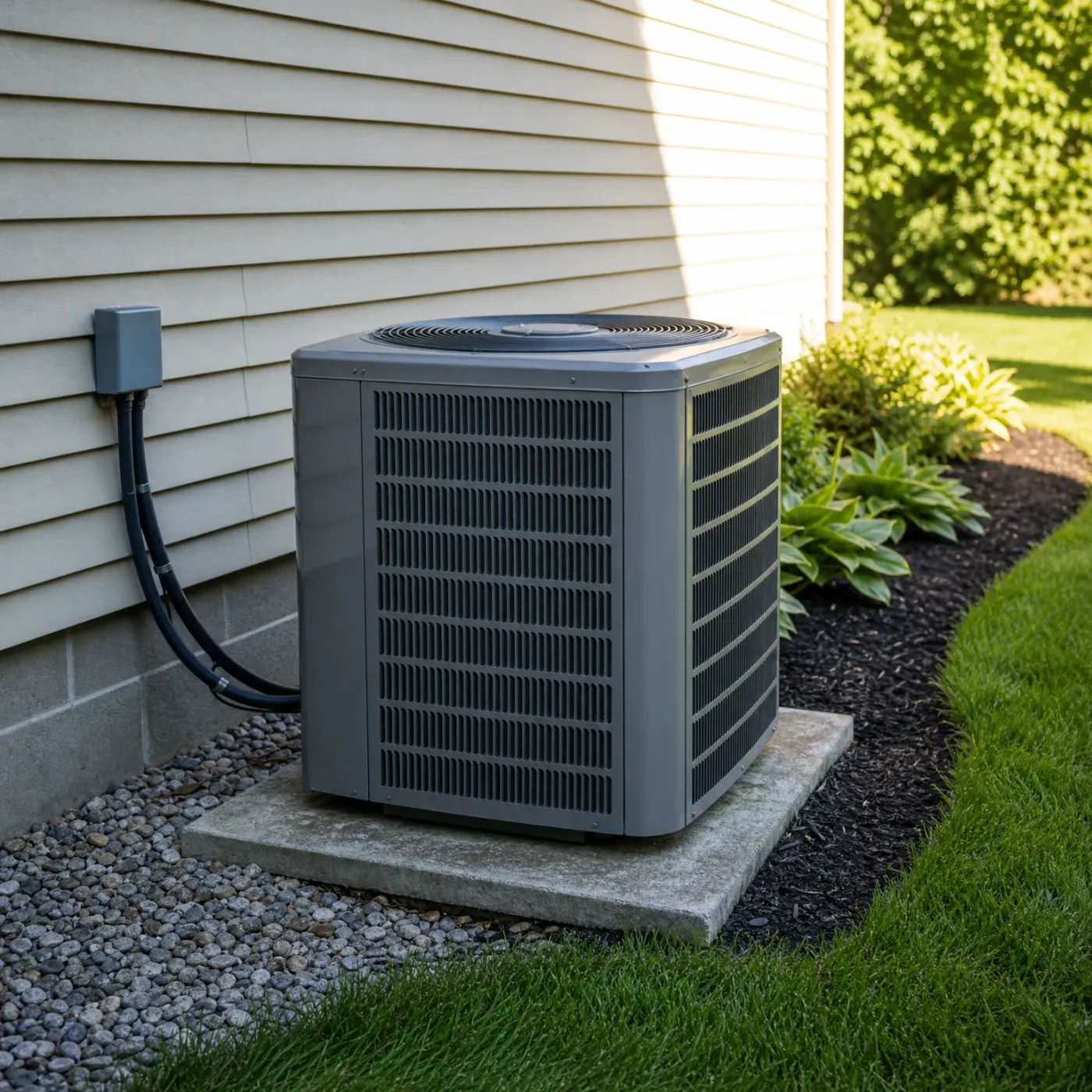
A gray outdoor air conditioning condenser unit on a concrete pad beside a house with horizontal siding and a stone veneer base, with refrigerant line and electrical disconnect box on the wall and flowering shrubs to the left.
A clean condenser with clear fins pulls power on the first call and shuts off once the house is cool.
An outdoor air conditioner condenser unit on a concrete pad beside a house with light gray horizontal siding, with mulch and green shrubs on either side and a concrete walkway in the foreground.
Dirt packed into the fins makes the compressor work against itself, and a weak start is often the first sign it's losing that fight.

Call Now or Wait It Out

Call for repair now

  • A hard clicking sound every time the thermostat calls for cooling means the contactor or capacitor is failing, not something that waits.
  • If the outdoor unit hums but the fan doesn't spin, the compressor may be seizing, and running it like that can burn out the motor windings.
  • A breaker that trips again within minutes of resetting points to a short in the compressor itself, and that gets worse the more times it's forced.
  • When the house is holding at 80 degrees or more with the system running, every hour on an oil-heated home's electric rate adds up for no cooling at all.
  • A unit that's gone completely silent, no hum, no click, often means the capacitor has failed outright and the compressor isn't getting power to try.

Reasonable to wait and watch

  • A single breaker trip after a storm or a brief power flicker is often just that, and the system may reset and run fine on its own.
  • If the outdoor unit is running and cooling but seems to take longer to reach the set temperature, that's worth watching, not an emergency.
  • A compressor that short-cycles, stopping and starting every few minutes, is a problem worth scheduling soon but not one that strands the house without cooling.
  • Mild weather with daytime temperatures in the 70s gives you room to wait a day or two without the house getting uncomfortable.
  • If this just started and the thermostat batteries are old or the display is dim, replacing those first can rule out a simple cause before calling anyone.
A woman with long wavy brown hair in a grey ribbed sweater sits on a couch indoors, looking toward a window, with a potted palm-like plant and fireplace behind her.
A woman with long brown hair wearing a green V-neck top and beige cardigan sits on a light sofa, looking off to the side, with a dining table, lamp and framed picture in the background.
A woman with long dark hair in a cream knit sweater sits on a beige sofa indoors, looking toward a bright window with a houseplant and framed picture in the background.
A woman with long dark hair in a green knit sweater sits on a couch indoors, smiling and looking toward a window with a blurred room behind her.
A gray outdoor air conditioner condenser unit on a concrete pad beside a house with horizontal vinyl siding, surrounded by mulch, flowering shrubs, and lawn.

Clean and clear

This condenser has open fins and nothing blocking the airflow around it. Pollen and cut grass wash off it instead of packing into the coil. The compressor pulls the power it needs, starts on the first call, and shuts off once the house is cool.


A weathered outdoor air conditioning condenser unit on a concrete pad beside a house with light horizontal siding, an electrical disconnect box and conduit on the wall, and mulched soil on either side.

Choked with grime

This one has fins caked with dirt and yard debris, so heat has nowhere to go. The compressor pushes harder to do the same job, and the strain shows up first as a hard start or a hum with no spin. Left this way, through a New Hampshire summer, it wears toward a failure that costs more than the repair would have.

Power costs 24.53 cents per kilowatt-hour statewide

At that rate, a compressor that struggles to start and draws extra amps on every attempt shows up fast on your bill. A failing capacitor doesn't just risk a no-start, it makes the compressor pull harder each time it tries, and here that costs more than almost anywhere else.

EIA-861 2025 statewide residential average

A gray outdoor air conditioner condenser unit on a concrete pad beside a house with horizontal lap siding, with a wall-mounted disconnect box and conduit to its right and shrubs to the left.

Running the way it should

This unit sits clear of the siding with nothing crowding it. The fins are open, the pad is level, and the conduit to the disconnect box is intact. When the thermostat calls, the compressor starts right up and the unit cools the house without a fight.

An outdoor air conditioning condenser unit on a concrete pad beside a house with horizontal lap siding, with a conduit and electrical disconnect box on the wall at right.

Struggling to start

Grime has built up across the coil guard on this one, and age shows in the cabinet. A unit left like this often hesitates before the compressor kicks on, or hums for a second without starting at all. That hesitation is worth having a contractor look at before a warm stretch finds the unit not starting at all.

What are you noticing when the AC won't start

You go to the thermostat and nothing answers. The outdoor unit sits quiet, or it hums without the fan moving, or you hear a hard click every few seconds as it tries and gives up. Inside, the air coming from the vents is warm, or barely moving at all. Some days it seems to work fine, then on the hottest afternoon it won't start at all, which is usually the compressor struggling hardest when it's asked to do the most. If this keeps happening, the house won't cool down when you need it to, and whoever is home during the day is stuck sitting in it.

A gray-haired woman in a cream knit sweater stands in a dimly lit kitchen at night, looking to her right, with a round loaf of bread in the foreground and a dark window and potted plant behind her.
A woman and a sleeping child wrapped together in a cream knitted blanket on a couch, with a potted plant, framed photo and lit lamp in the background.
A gray outdoor air conditioner condenser unit on a concrete pad beside a house with horizontal siding and a stone veneer foundation, surrounded by mulch, ornamental grasses, and shrubs, with a conduit and disconnect box on the wall.

A local pro for your air conditioner repair

Your request stays with one local pro.

Say what's going on with your air conditioner, and a pro who works on them reaches out.

Find an air conditioner pro

No charge to send it. You decide if you hire them.

Why does my outdoor unit hum but the fan won't turn?

You stand by the outdoor unit and the fan isn't moving, but you can hear a steady hum coming from inside the cabinet. The house is getting warmer and you want to know if this is something simple or something that's going to leave you without AC for the rest of a warm New Hampshire afternoon.

The capacitor is giving the motor a jolt but not enough to get it spinning

A humming fan motor usually means power is reaching it but the start capacitor can't deliver the push needed to get the blades moving. The motor sits there drawing current and building heat instead of turning, and the compressor behind it may be trying to start the same way. Left running, this can trip the unit's internal overload or damage the motor windings from the heat. A weak capacitor rarely fixes itself. It gets weaker as the summer goes on, so a unit that hums today may not start at all on the next hot afternoon. Shutting it off at the thermostat until someone looks at it protects the motor from that extra strain.

A gray outdoor air conditioner condenser unit on a concrete pad beside a house with horizontal siding and a light stucco wall, with a disconnect box and refrigerant lines on the wall and a shrub and mulch bed at left.

The start capacitor's job

A capacitor stores a charge and releases it in one push to get the compressor's motor turning. Once the motor is spinning, it doesn't need that extra push anymore. If the capacitor has weakened, it still delivers something, just not enough to get a heavy compressor moving against the pressure already in the lines. That's why a struggling start often happens on the hottest days, when the system has been cycling hard for hours.

A gray outdoor air conditioning condenser unit on a concrete pad surrounded by gravel, next to a white horizontal-lap-sided house wall with an electrical box and conduit, against a blank white background on the left.

What the contactor actually does

The contactor is a switch that closes when the thermostat calls for cooling, sending power out to the compressor and the outdoor fan. It closes and opens every single cycle, all summer. The contact points are metal touching metal under load, and over enough cycles they pit and burn. A pitted contactor can stick open, and no amount of charge from a good capacitor will get power through a switch that won't close.

A man seen from behind raises his hand to wave at a woman standing in the open front doorway of a single-story house with gray shingle siding, white columns and a gabled porch entry.

A compressor that won't start has a reason behind it

Most of the time it comes down to the capacitor, the contactor, or the compressor itself losing the fight against a dirty condenser. You don't need to know which one it is before you call. You just need to know the house is getting warmer and something outside stopped doing its job.

A licensed contractor working near you has likely opened up this exact unit before, on a house like yours, this same summer. When you ask to be matched, you're connected with one contractor who takes calls in your area and knows what tends to fail first in a New Hampshire summer. They reach out to you directly, so you're not explaining your situation to three different companies before anyone shows up.

A living room corner with a beige upholstered armchair holding navy and striped cushions, a small round wooden side table with a carved bowl and a potted green plant, a framed landscape picture on a pale wall, built-in shelving, and a curtained window.
A gray outdoor air conditioning condenser unit on a concrete pad beside a house with light horizontal siding, with gravel, dark mulch, shrubs and lawn nearby and a conduit box on the wall.

Get the right pro for your air conditioner

Get a local pro

Your request goes to one pro, not a list of companies.

There's no charge for the request.