Tell us about the job
Takes about a minute. No obligation.
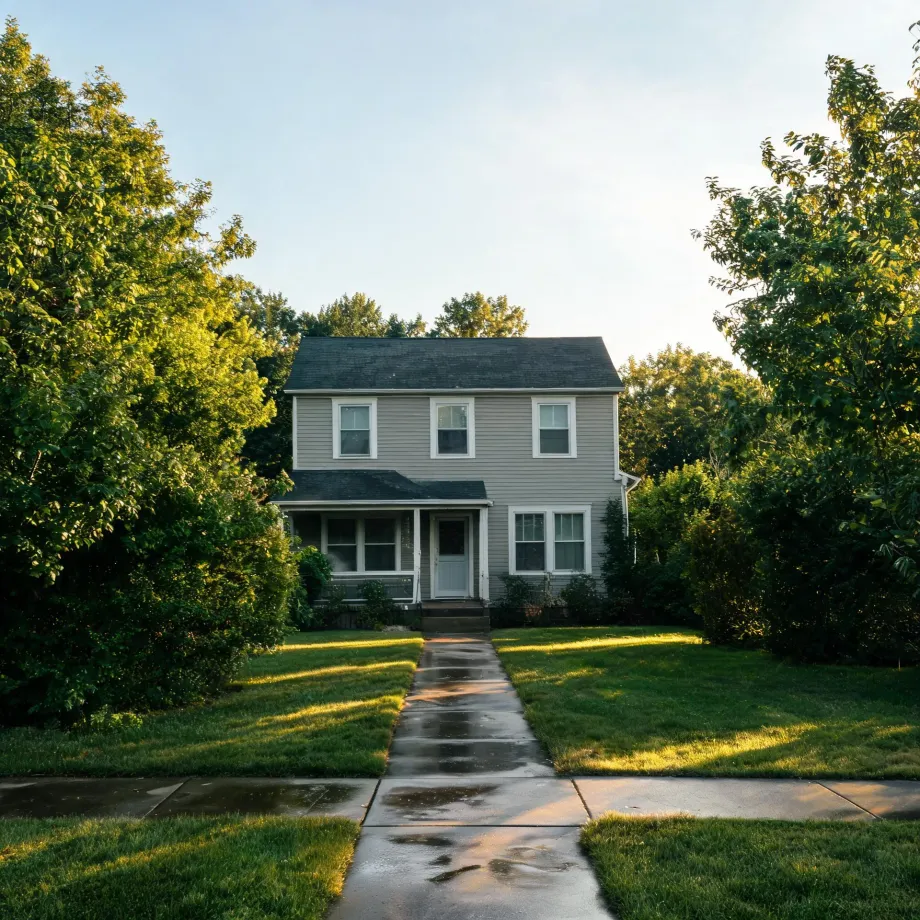
Homes in Strafford County, NH run cooling in a single month of the year, July. A compressor that sits off from August through June can develop a refrigerant leak, a failing contactor, or a seized fan motor and show nothing until it starts. When that first July call comes in, a contractor pulls the covers and works backward through what a season of hard starting and stopping has already done to the components inside. The short cooling window does not protect a system from failure; it delays the discovery of one.
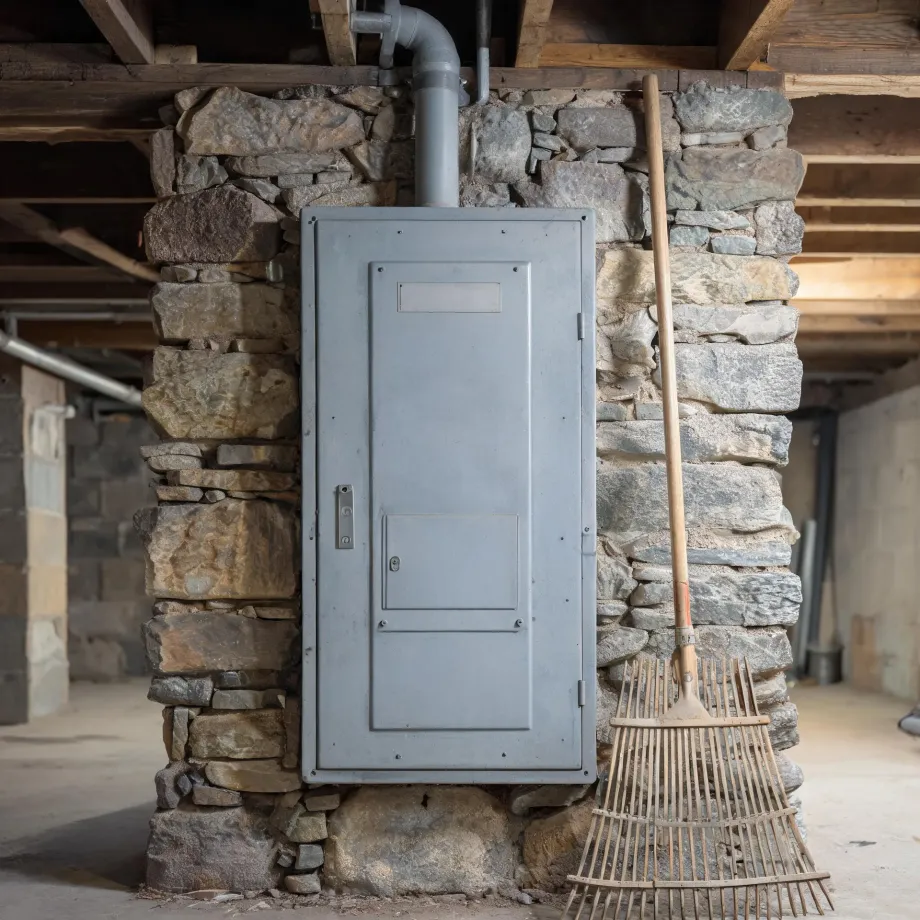
Ductwork laid in for one generation of equipment and then run with successive replacements carries a repair history that shows up inside the system, not on the outside of it. Half the homes in Strafford County, New Hampshire were built in 1979 or earlier (2020-2024 ACS 5-year). A contractor pulling a failed component in a house like this often finds that the surrounding ductwork has been patched, resealed, or rerouted around the original problem rather than fixed, and whether the parts a current system takes are still made is a separate question from whether the ducts will deliver what a repaired system produces. Both answers come from opening the system, not from the address.
The Parts of a Central AC a Contractor Checks First
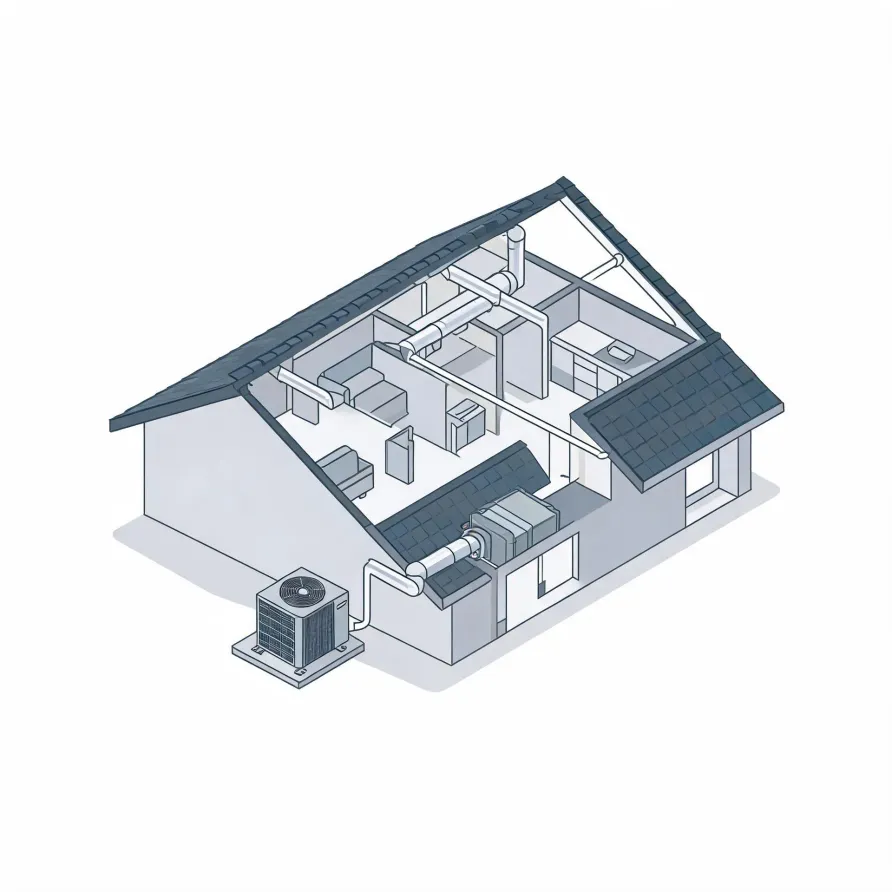
The outdoor condenser unit sits outside the house, usually on a concrete pad at ground level, and houses the compressor and condenser coil. These are the parts a contractor reaches first when a system stops cooling, runs constantly, or makes noise it did not make before. A failed compressor or a dirty, damaged condenser coil accounts for a large share of repair calls.
Inside the house, the air handler holds the evaporator coil and the blower that pulls air across it. The refrigerant line set runs between the two units, and the expansion valve and the system's controls tie the whole loop together. When airflow is weak, the house cools unevenly, or the system short-cycles, the contractor works through these interior components to find where the fault sits.
The drawing shows a typical central AC layout, and a licensed contractor determines which components and conditions apply to your specific home.
Find a contractor in Strafford CountyStrafford County by the Numbers
97 severe weather events were recorded in Strafford County, New Hampshire between 2015 and 2024.
NOAA National Centers for Environmental Information, Storm Events Database, bulk CSV export, events 2015-01-01 through 2024-12-31.Half the homes in Strafford County, New Hampshire were built in 1979 or earlier (2020-2024 ACS 5-year).
U.S. Census Bureau, 2020-2024 American Community Survey 5-Year EstimatesStrafford County, New Hampshire holds 56,609 housing units (2020-2024 ACS 5-year).
U.S. Census Bureau, 2020-2024 American Community Survey 5-Year EstimatesOwners occupy 67.1% of the occupied homes in Strafford County, New Hampshire (2020-2024 ACS 5-year).
U.S. Census Bureau, 2020-2024 American Community Survey 5-Year EstimatesAC Repair Rules and Standards on Record for Strafford County, New Hampshire10 sourced rules and standards
What the Repair Visit Looks Like
Split-system central air conditioners rated below 45,000 Btu/h manufactured on or after January 1, 2023 must meet a federal minimum of 13.4 SEER2.
Split-system central air conditioners rated at or above 45,000 Btu/h manufactured on or after January 1, 2023 must meet a federal minimum of 13.4 SEER2.
Split-system central air conditioners manufactured between January 1, 2015 and December 31, 2022 had to meet 13 SEER, the metric that preceded SEER2.
Single-package central air conditioners manufactured on or after January 1, 2023 must meet a federal minimum of 13.4 SEER2.
Space-constrained central air conditioners manufactured on or after January 1, 2023 must meet a federal minimum of 11.7 SEER2.
Federal efficiency standards for split-system central air conditioners and heat pumps are set on each certified combination of outdoor unit and indoor coil rather than on the outdoor unit alone.
Residential and light commercial air conditioning and heat pump systems assembled in the field, including mini-splits and unitary systems, may not be installed on or after January 1, 2025 using a refrigerant with a global warming potential above 700.
A field-assembled system whose specified components were all manufactured or imported before January 1, 2025 carries no installation compliance date under the refrigerant restrictions and may still be installed.
Licensing Rules for HVAC Repair in Strafford County, New Hampshire
New Hampshire's mechanical licensing board issues nine credentials — hearth system, four fuel gas endorsements, domestic appliance technician, and master, journeyman and apprentice plumber — and a licensee may not work outside the specialty their licence names. None of the nine is an HVAC licence.
New Hampshire does not license HVAC as a trade, and says so where it matters: the plumbing licence expressly does not reach a person installing heating, cooling, air conditioning or domestic water heating systems, whether solar, oil, gas or electric. The gas piping on a gas-fired system is a separate matter and needs a fuel gas fitter licence.
Severe Weather Events in Strafford County
Extreme weather puts real strain on central AC systems, compressing their workload into short windows and accelerating wear on components that might otherwise last years longer. How much of that pressure a system faces depends on where it runs, which is why local weather history belongs on a page about repair work in Strafford County.
97 severe weather events, 2015–2024. Source: NOAA National Centers for Environmental Information, Storm Events Database.